Warning Signs of a Leak Under Your Concrete Slab
Warm spots on the floor, a water bill that jumps $80 in a month, the sound of running water when nothing is on. Here are the slab leak warning signs Wellington homeowners miss.
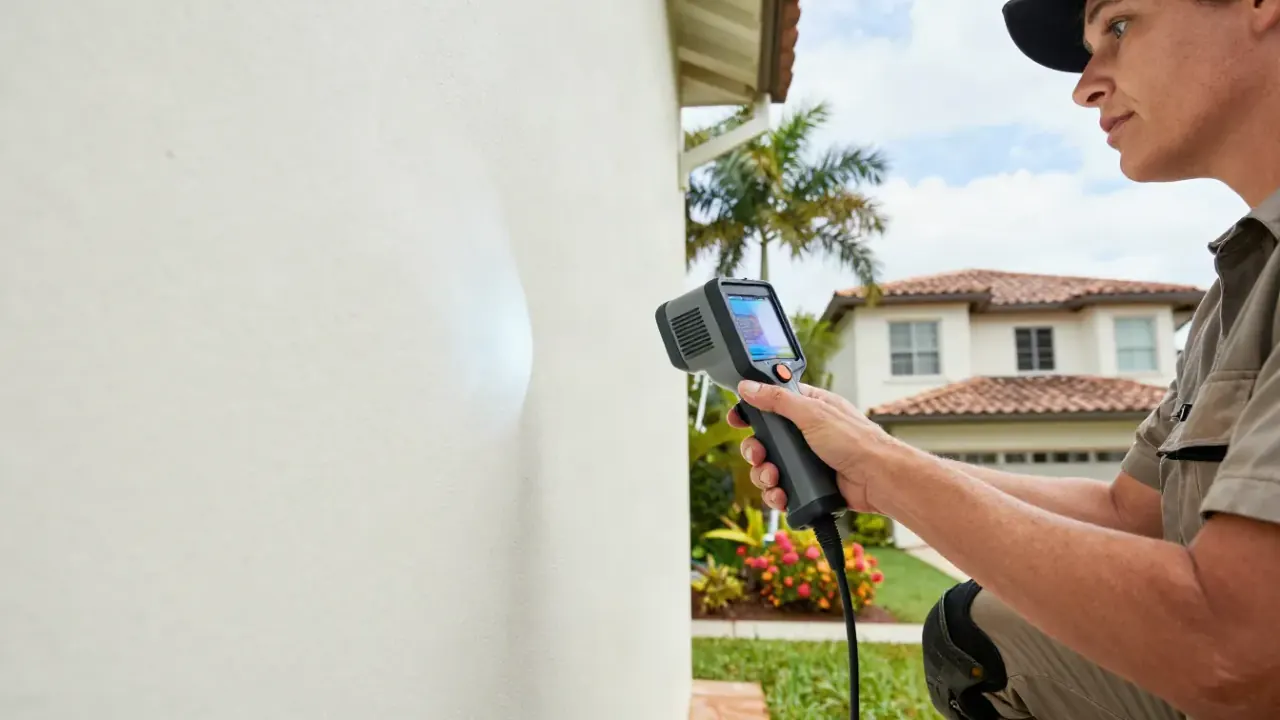
The warning signs of a leak under your concrete slab in Wellington FL are a warm spot on the floor, a water bill that jumps without a change in habits, the sound of running water when every fixture is off, and unexplained dampness at the base of a wall. Any one of those is enough to justify a professional look before the slab, the flooring, or the drywall above it takes on water damage.
We have traced hundreds of slab leaks across Wellington, from 1980s ranch homes off Greenview Shores to newer builds in the equestrian corridors. The pattern is almost always the same: the leak has been running for weeks before anyone calls. Below is what to look for, what each sign actually means, and how we locate the break without tearing up your floor.
What Are the Warning Signs of a Leak Under Your Concrete Slab in Wellington FL?
A leak under a concrete slab is a pressurized water line failure beneath the foundation that pushes water into the soil and, eventually, into your home. In Wellington, that line is usually a copper supply pipe running under the slab from the meter or the water heater, and it fails from the inside out.
The signs fall into four buckets: heat, sound, water, and cost. Heat shows up as a warm or hot patch on tile or vinyl. Sound is the faint hiss or trickle you hear at night when the house is quiet. Water is the moisture you can see or smell - a damp baseboard, a musty closet, a crack that stays dark. Cost is the water bill that climbs $40 to $150 a month with no explanation.
One sign alone is a maybe. Two signs together is a slab leak until proven otherwise.
The Warning Signs Most Wellington Homeowners Notice First
The first sign Wellington homeowners notice is almost never the leak itself - it is the bill or the floor. Here is what each warning sign means, ranked by how often we see it on a first visit.
1. A water bill that jumps 20% or more
A slab leak on a half-inch copper line can lose 1 to 3 gallons per minute. That is 1,400 to 4,300 gallons a day, and at Wellington water rates that shows up as $60 to $200 added to a single monthly bill. If your usage climbed and nobody added a pool fill, a new irrigation zone, or a houseguest, the meter is telling you the truth.
We start most investigations here. A water meter leak investigation Wellington takes about 45 minutes: we shut every fixture, watch the meter's leak indicator, and isolate the irrigation and pool loops from the domestic line. That tells us whether the loss is under the slab or outside the house.
2. Warm or hot spots on the floor
Hot spots on the floor are the signature of a hot-water slab leak. A break on the hot side of the system lets 120°F water bleed into the soil under the slab, and that heat conducts up through tile, travertine, or vinyl. You will feel it barefoot in the hallway, the kitchen, or the bathroom - an area roughly the size of a dinner plate that stays warm long after the sun goes down.
This is one of the most useful concrete slab leak indicators because it points us to the room before we ever bring in acoustic equipment.
3. The sound of running water when nothing is on
Put your ear to the floor at night. A slab leak makes a steady hiss, a faint trickle, or a low hum that does not stop when you shut the last faucet. If you hear it near a wall, the break may be closer to the perimeter than the middle of the room.
4. Damp carpet, buckling flooring, or a hot baseboard
Water under a slab has to go somewhere. It wicks up through the concrete and shows at the edges: a carpet pad that feels cool and damp, laminate that cups at the seams, tile that pops loose, or a baseboard that is warm to the touch on the hot-water side. In Wellington's humidity, that moisture also feeds mold fast - often within 48 to 72 hours of the leak reaching the surface.
5. Cracks in the slab or the wall above it
A slow leak erodes the soil under the slab and can shift the foundation. Look for new cracks wider than a credit card, doors that suddenly stick, or a crack in the drywall that runs diagonally from a corner. These are late-stage signs. By the time the slab moves, the repair is bigger than the pipe.
Why Slab Leaks Happen So Often in Wellington
Wellington's soil and water chemistry are hard on copper. Much of the village sits on sandy, slightly acidic soil, and the same minerals that stain a shower door attack pipe walls from the inside. Add 30 to 40 years of service on homes built in the 1980s and 1990s, and you get pinhole leaks that start small and grow.
We see this constantly in the older sections of Greenview Shores Leak Detection, where original copper supply lines are now well past their expected service life. The same pattern shows up in the equestrian communities - large lots, long underground runs, and irrigation systems that share a trench with the domestic line.
Two other local factors matter. First, Wellington's water is treated and pressurized, and pressure spikes from the municipal system stress older joints. Second, slab-on-grade construction is the norm here, so there is no crawlspace to inspect. The pipe is under 4 inches of concrete, and you only learn about a failure when it reaches the surface.
How to Detect a Slab Leak Early in Wellington
You can narrow down a slab leak in about 15 minutes with nothing but your water meter and a flashlight. Do this before you call anyone - it makes the professional visit faster and cheaper.
- Shut off every water user. Faucets, toilets, the ice maker, the pool autofill, the irrigation controller. Everything.
- Find your meter. It is usually at the curb in a concrete or plastic box. Lift the lid and look for the small leak indicator - a triangle or a low-flow dial.
- Watch it for 10 minutes. If the indicator moves with everything off, water is moving through the line. If it stays still, the loss is likely downstream of the meter but outside the house - irrigation, pool, or a service line break.
- Check the water heater. Shut the valve on the cold inlet to the heater. If the meter stops, the leak is on the hot side. If it keeps spinning, the leak is on the cold side.
- Listen and feel. Walk the house barefoot. Note any warm patch, any soft spot in the carpet, any baseboard that feels different from its neighbors.
If the meter keeps moving with the house isolated, you have a confirmed loss. The next step is finding exactly where it is so we can open a small section of floor instead of a large one. That is what slab leak detection Wellington is for - acoustic listening, thermal imaging, and pressure isolation to pinpoint the break within a few inches.
What to Watch Out For When You Suspect a Slab Leak
The most expensive slab leak mistakes are the ones made in the first week, before anyone confirms the source. Watch for these.
- Assuming it is the irrigation. A broken sprinkler zone and a slab leak look identical on the meter. We isolate the irrigation loop first because it is the cheaper fix - but do not stop there if the meter still moves.
- Waiting for visible water. By the time water reaches your floor, the soil under the slab has been saturated for weeks. Mold, foundation movement, and ruined flooring all start before you see a puddle.
- Letting a handyman jackhammer the floor. Opening concrete without locating the leak first turns a $400 repair into a $4,000 floor replacement. Locate, then open.
- Ignoring a small hot spot. A warm patch the size of a plate is a confirmed hot-water leak. It will not seal itself, and it will not get smaller.
- Confusing it with a drain leak. Supply leaks run constantly. Drain leaks only show when you use a fixture. If the meter is still with everything off but the floor is wet after a shower, you may be looking at a drain line instead - that calls for a sewer camera inspection Wellington.
One more: do not pour sealant into the line. Epoxy and stop-leak products can buy a few weeks, but they coat the inside of every pipe in the house and make the eventual repair harder.
When to Call a Professional
Call us when the meter moves with the house shut off, when you feel a warm spot on the floor, or when your water bill climbs more than 20% in a single cycle. Those three signs together are a confirmed slab leak in most Wellington homes.
We handle this every week across the village, from Olympia Leak Detection to the smaller communities off Pierson Road. Our process is straightforward: we locate the break with acoustic and thermal equipment, confirm it with pressure isolation, then repair the pipe and pressure-test the line before we close the floor. You get a written location, a photo of the break, and a repair that is tested, not guessed.
If you are not sure whether you have a slab leak or something else, call us anyway. A 45-minute investigation is far cheaper than a new floor.
Frequently Asked Questions
What are the warning signs of a leak under my concrete slab in Wellington FL?
The main signs are a warm or hot spot on the floor, a water bill that jumps 20% or more, the sound of running water with all fixtures off, damp carpet or baseboards, and new cracks in the slab or drywall. Two or more together usually means a confirmed slab leak.
How do I know if my slab is leaking in Wellington?
Shut off every water user and watch your meter's leak indicator for 10 minutes. If it moves, you have a loss. Then shut the valve to the water heater - if the meter stops, the leak is on the hot side, which is the most common slab leak we find in Wellington homes.
Can a slab leak cause hot spots on the floor?
Yes. A hot-water slab leak pushes 120°F water into the soil under the slab, and that heat rises through tile, travertine, or vinyl. A warm patch the size of a dinner plate that stays warm at night is one of the most reliable signs of a hot-side slab leak.
Who should I call for slab leak detection in Wellington?
Call a leak detection specialist, not a general plumber or a handyman. Locating a slab leak takes acoustic listening, thermal imaging, and pressure isolation. Wellington Leak Detection handles this daily across the village and can usually pinpoint the break within a few inches.
How much does slab leak detection cost in Wellington?
Typical 2026 pricing in this area runs $350 to $650 for a full slab leak investigation, including meter testing, acoustic location, and thermal imaging. The repair itself depends on access and pipe material, and we quote it before we open any concrete.
Get Help with Leak Detection in Wellington
If you have spotted any of these warning signs, do not wait for the floor to buckle. We locate slab leaks across Wellington with acoustic and thermal equipment, open only what we have to, and test the line before we leave.
Call Wellington Leak Detection at (561) 760-4218 to schedule a slab leak investigation. Same-week appointments are usually available, and we will tell you on the phone whether your symptoms sound like a slab leak or something else.