Moisture, Mold and Hidden Plumbing Leaks in Humid Climates
Wellington's year-round humidity turns a slow hidden leak into visible mold in as little as 48 hours. Here's how to spot it and stop it.
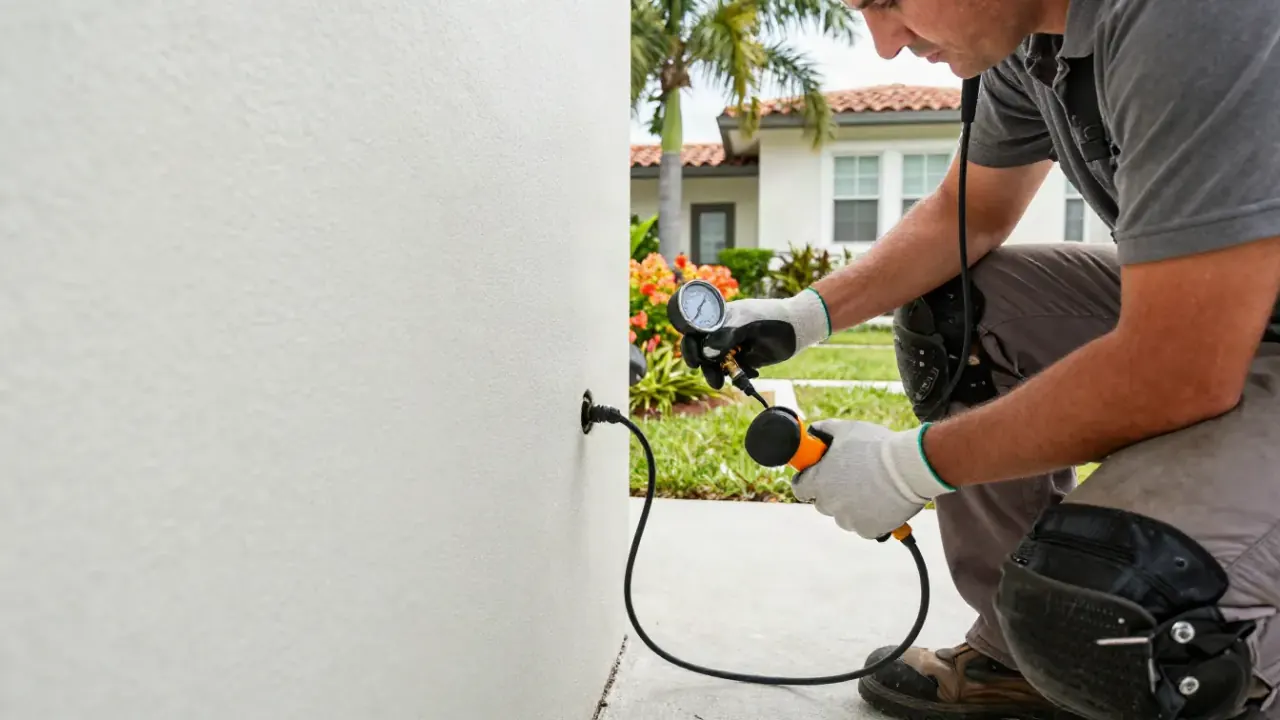
A hidden plumbing leak in Wellington's humid climate can grow visible mold in 24 to 48 hours, because indoor relative humidity here sits between 70% and 90% for most of the year. That combination - a slow drip behind a cabinet plus air that is already saturated - is why so many local mold jobs trace back to a pinhole leak nobody heard. Moisture, mold and hidden plumbing leaks in humid climates Wellington FL are not three separate problems; they are one chain, and the leak is always the first link. Below we cover why this happens here, the signs that a wall or cabinet is already wet, and how to stop mold before it starts.
Why Humid Climates Turn Small Leaks Into Mold Problems
Wellington's average outdoor humidity runs 75% to 85% from May through October, and that moisture never fully leaves your home. Mold needs three things: a food source (drywall paper, wood framing, baseboards), a temperature between 60°F and 80°F, and sustained moisture. Wellington supplies all three year-round. A leak that would dry out in a Phoenix attic in a day stays wet here for weeks.
What makes this worse is that our homes run air conditioning almost constantly. That cool air hits a warm, damp wall cavity and condenses on the cold side of the drywall - the side you cannot see. So even a leak that seems minor, like a quarter-cup a day, keeps the paper facing of your drywall damp enough for mold spores to colonize. Once mold takes hold in a wall cavity, it does not need the leak to keep growing. It just needs the humidity, which Wellington has plenty of.
The practical takeaway: in this climate, a hidden leak is a mold problem on a timer. Finding it early is cheaper than remediating it later. Our team handles Ceiling and Wall Leak Tracing Wellington FL specifically because these are the leaks homeowners hear last and see first - as a brown ring on the ceiling or a soft spot behind the baseboard.
Signs of Hidden Plumbing Leaks Causing Mold in Wellington
Signs of hidden plumbing leaks causing mold in Wellington usually show up in the room next to the leak, not the room with the leak. That is the part most homeowners miss. You will smell it before you see it in many cases - a musty, earthy odor that does not go away after you clean.
Watch for these:
- A musty smell in one room that returns within a day of cleaning. That is mold growing inside a wall or under a floor.
- Paint or wallpaper bubbling along a baseboard or ceiling line. Moisture is pushing through from behind.
- Soft or spongy drywall when you press it lightly. If it gives, the paper facing is already saturated.
- Dark staining on baseboards or door trim, especially near a bathroom, kitchen, or laundry wall.
- Warped cabinet bottoms under sinks - the particle board swells before you ever see a drip.
- A water bill that jumped 10% to 20% with no change in habits. That is often a slab or service line leak, not a fixture.
If you see two or more of these together, treat it as an active leak. Do not wait for visible water. In Wellington's humidity, the mold is already working.
How Fast Does Mold Grow From a Hidden Leak in Wellington FL?
Mold can begin colonizing a wet surface in Wellington in 24 to 48 hours, and visible growth appears in 7 to 10 days if the moisture source stays active. That timeline is faster than the national average because our indoor humidity rarely drops below 60%, even in winter. In a drier climate, a leak might take a week to create the same conditions.
Here is the sequence we see on most jobs:
- Day 1-2: Leak starts. Drywall paper absorbs moisture. No visible sign.
- Day 3-7: Mold spores land and begin to grow. A faint musty odor appears.
- Day 7-14: Visible dark spots or staining on the wall, ceiling, or cabinet base.
- Week 3+: Mold spreads into the wall cavity and along framing. Remediation cost climbs fast.
That is why we push for detection the same week you notice a smell or a stain. A $250 to $500 leak detection visit in 2026 is a fraction of what mold remediation runs - typically $1,500 to $6,000 in this area once a wall cavity is involved.
Where Hidden Leaks Hide in Wellington Homes
Wellington's housing stock - much of it built between the late 1980s and mid-2000s - has predictable leak locations. The plumbing materials of that era, including polybutylene in some 1980s and early 1990s builds and early copper with failing solder joints, are now at the age where pinhole leaks are common. Add our shifting soil and high water table, and slab and underground lines move more than they do in drier parts of Florida.
The most common hiding spots we open up:
- Slab-on-grade supply lines under tile or laminate. These leak slowly and show up as a warm spot on the floor or a rising water bill.
- Wall cavities behind shower valves and tub surrounds, where a failed seal drips inside the wall for months.
- Under-sink cabinet bases in kitchens and bathrooms, where a slow supply or drain connection weeps.
- Irrigation and sprinkler lines in the yard, which keep the soil around your foundation saturated.
- Pool and spa plumbing, where a small line leak keeps surrounding soil wet and can wick toward the house.
We work these neighborhoods constantly. In Leak Detection in Palm Beach Polo, for example, the larger lots and mature landscaping mean irrigation line leaks are a frequent culprit behind foundation moisture. In Leak Detection in Olympia, we see more slab leaks in the original 1990s builds. Same climate, slightly different leak patterns.
How to Prevent Mold From Hidden Leaks in Wellington
Preventing mold from hidden leaks in Wellington comes down to controlling moisture before it has a chance to sit. You cannot lower the outdoor humidity, but you can keep your indoor air and your plumbing dry enough that a small leak never becomes a mold colony.
What actually works here:
- Keep indoor humidity between 45% and 55%. A $15 hygrometer from any hardware store tells you where you stand. If you are above 60% with the AC running, your system is oversized or your ducts are leaking.
- Run bathroom and kitchen exhaust fans for 20 minutes after use. Not five. Twenty. That is how long it takes to pull the moisture out of the room.
- Check under every sink once a month. Run a dry paper towel along the supply lines and the cabinet floor. Any dampness means a leak.
- Watch your water bill. A jump of 1,000 to 2,000 gallons in a month with no change in use is a leak signal. Our Water Meter and High Water Bill Investigation Wellington FL is built for exactly this - we isolate the meter and find the source before you tear anything open.
- Have irrigation and pool lines checked annually. A sprinkler valve that runs an extra 10 minutes a day can put hundreds of gallons into the soil around your slab.
If you have already found moisture and want it traced without guesswork, our wall leak tracing Wellington FL work uses thermal imaging and moisture meters to map exactly where the water is coming from.
Common Mistakes Wellington Homeowners Make With Moisture
The biggest mistake we see is treating a musty smell as a cleaning problem instead of a plumbing problem. Homeowners buy air purifiers, run dehumidifiers, and repaint the wall - and the leak keeps feeding the mold behind it. Three months later, the stain is back and the remediation quote is triple what it would have been.
Other mistakes that cost real money here:
- Painting over a water stain without finding the source. The paint will bubble within weeks in this humidity.
- Assuming a small drip is harmless. A drip at one drop per second wastes about 3,000 gallons a year and keeps a wall cavity wet the entire time.
- Running the AC colder to "dry out" a damp room. That makes condensation on the wall cavity worse, not better.
- Ignoring a rising water bill because nothing looks wet. Slab and service line leaks often show no visible water at all until they have done real damage.
- Opening the wall yourself to look. You will release mold spores into the living space. Let a technician locate the leak first, then open only what needs to be opened.
We handle Slab Leak Location Wellington FL for this exact reason - pinpointing the break before anyone cuts concrete saves thousands in unnecessary demolition.
When to Call a Professional
Call us when you smell mustiness that returns after cleaning, when you see a stain or soft drywall, or when your water bill jumps without explanation. Those three signals together almost always mean an active hidden leak, and in Wellington's humidity the mold clock is already running.
Wellington Leak Detection finds the source with thermal imaging, acoustic listening, and pressure testing - no exploratory demolition. We tell you where the leak is, what it will cost to fix, and we do the repair. If you are in one of the equestrian communities west of the village, our Leak Detection in Equestrian Club covers the larger properties and outbuildings where irrigation and service line leaks are common.
For most homes in the Wellington area, a standard leak detection visit runs $250 to $500 in 2026, and we credit that toward the repair when you have us do the work. That is a small number next to a mold remediation bill.
Frequently Asked Questions
Can a hidden plumbing leak cause mold in Wellington FL?
Yes. In Wellington's 70% to 90% humidity, a hidden leak can produce visible mold in 7 to 10 days and colonization in as little as 24 to 48 hours. The leak keeps the drywall or framing wet, and the ambient humidity keeps it wet even after the leak slows.
How do I prevent mold from a leak in humid Wellington weather?
Keep indoor humidity between 45% and 55%, run exhaust fans for 20 minutes after showers, check under sinks monthly, and watch your water bill for jumps of 1,000 gallons or more. Fix any leak within a week of finding it - that is your window before mold takes hold.
What are the signs of moisture behind walls in Wellington?
A musty odor that returns after cleaning, bubbling or peeling paint, soft drywall when pressed, dark staining on baseboards, and a water bill that rose 10% to 20% with no change in use. Two or more together usually mean an active leak.
Who can find hidden leaks before mold grows in Wellington?
A licensed leak detection company using thermal imaging, acoustic sensors, and pressure testing. Wellington Leak Detection locates slab, wall, ceiling, service line, irrigation, and pool leaks without exploratory demolition, usually in a single visit.
Does homeowners insurance cover mold from a hidden leak in Wellington?
Most Florida policies cover the sudden water damage but exclude long-term mold that could have been prevented. Document the leak detection report - it shows the leak was found and addressed promptly, which strengthens the claim.
Get Help With Leak Detection in Wellington
If you smell mustiness, see a stain, or your water bill jumped, do not wait for the mold to show. We find the leak, fix it, and test the line before we leave - usually the same day you call.
Call Wellington Leak Detection at (561) 760-4218 to schedule your leak inspection.